Guide · Electric opening rooflights · 10 min read
Using an Opening Rooflight to Ventilate a Room
Warm air leaves through the top of the room, so that is where to open.
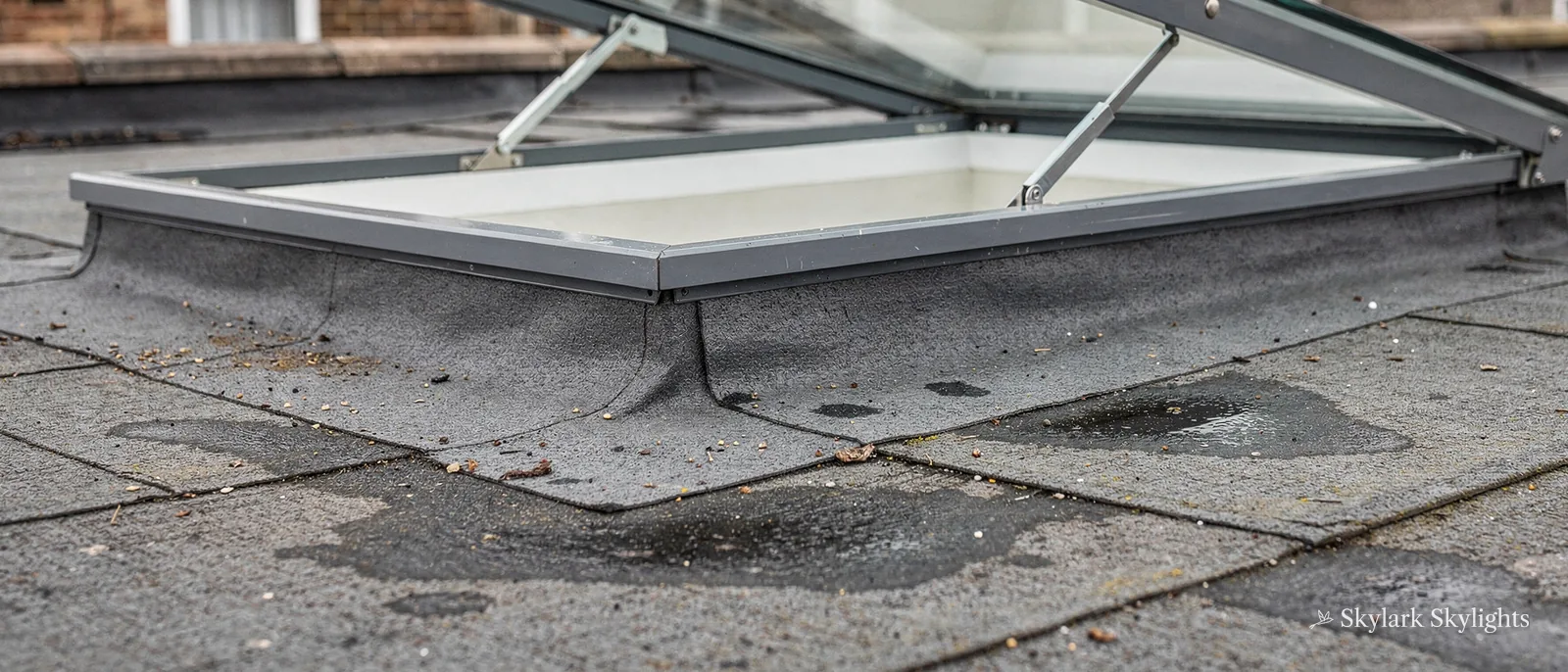
Most of us open a window at the side of a room and hope for a draught. An opening rooflight works differently, and often better, because it sits at the highest point and lets warm, damp or stale air go straight up and out. That is the physics behind rooflight ventilation, and it explains why a small opening overhead can do the work of a much larger one at the side. This guide covers how it works, which rooms gain most, how opening skylight ventilation pairs with a low window, and what to check so the unit is placed where it will really be used. It also covers the limits, because a rooflight is not a cure for every damp room.
Why a high opening ventilates so well
Warm air is lighter than cool air, so it climbs. In a room with a ceiling, the warmest, dampest, most stale air collects against that ceiling. A window set at head height lets some of that air out, but a rooflight is above it all. When you open it, the warm air has a clear path upward and cooler air drifts in from lower openings to replace it.
This is sometimes called the stack effect. You do not need to remember the name. What matters is the habit it suggests: a high opening paired with a low one moves air without any fan. Open the rooflight and a window or door at floor or table height, and the room starts to breathe on its own.
The difference shows most on hot days. A flat or sloping roof that has been in the sun heats the air beneath it, and a rooflight opened to the sky lets that heat go. Kept closed, the same glass can trap warmth. This is why electric opening is useful as well as convenient. You can open the unit for an hour in the afternoon without climbing on a chair, and you can set it to close again.
How wide to open
A small opening, a hand's width or less, is enough for ordinary venting. A wider opening moves more air but also lets in more weather and noise. The first few centimetres do much of the work, so a unit that stops at a partial opening is a sensible choice.
Kitchens, bathrooms and the rooms that gain most
Think about where the air in your house is at its worst. Often it is the kitchen, the bathroom or the room at the top of the stairs under a hot roof. Each of those has a spot where the air needs to leave.
Above the worktop and hob
Cooking sends steam and warmth upward. A rooflight over a kitchen worktop is placed to light the work, and the same unit, if it opens, can release the steam. It does not replace a cooker hood, which has its own job, but it takes a great deal of moisture out of the room after a heavy cooking session.
Over the basin or bath
In a bathroom, damp air settles on the coolest surfaces and leaves mould. A rooflight over a basin or bath gives a high exit for that air and daylight on the surface that most needs to dry. Fitted together with an extractor, it helps the room clear faster. If you are fitting a rooflight in a room with no window at all, the opening skylight can also give the room fresh air for the first time.
A landing or loft room
Loft bedrooms get hot, because the roof sits right above them. An opening rooflight, or an opening roof window, sets the heat free. A pair of openings, one at the ridge side and one lower, works best. In a chalet bungalow, rooms in the roof can be served by a roof window, and Approved Document B applies where the window doubles as the escape route.
Extensions and open-plan rooms
Kitchen extensions with a roof lantern or flat rooflight have a lot of glass and a lot of warm air. An opening unit here is the quickest way to take the edge off a room that has begun to feel like a conservatory.
Which room wants which opening
| Room | Problem | Helps most |
|---|---|---|
| Kitchen | Steam and heat | Opening over the worktop |
| Bathroom | Damp air | Opening plus extractor |
| Loft bedroom | Trapped heat | High and low openings |
| Extension | Solar warmth | Opening lantern or rooflight |
Why electric opening makes ventilation a habit
A manual rooflight is perfectly good, but people only use what they can reach. If the unit is well above head height, a pole or a handle on a long arm is needed, and it is easy to put off. The result is a rooflight that is shut most of the time, and a room that is stuffy.
Electric opening removes that barrier. A wall switch or a remote opens the sash, and you can vent a room in the time it takes to put the kettle on. That makes ventilation something you do daily, rather than something you plan to do.
A control can go further. Some systems can be set to open for part of the day, or to open when a temperature or humidity level is passed. These features depend on the make and model, so they are a conversation to have at the survey, once we have seen the room and the spot. For a fuller look at the different ways to operate a unit, the rain sensor guide explains the options.
Safe to leave open
The big worry with venting is rain. A unit that opens often needs to close itself if the weather turns, and that is exactly what a rain sensor does. Together, the opening and the sensor make a rooflight that works for you without needing supervision.
Security
An open rooflight on a high roof is not an easy way into a house, but it is still sensible to close it when you go out for a long period. Many units can be closed from a single switch at the door.
Placing the unit so the air really moves
The best ventilation comes from a good position, not a big unit. The first question is where the warm air gathers. Under a pitched roof it collects at the highest point, so a roof window placed high on the slope is more effective than one set low. On a flat roof it collects across the ceiling, so position matters less, but a unit over the hot spot of the room still helps most.
The second question is the route for incoming air. A rooflight with no other opening in the room has to pull air through gaps and under doors, which is slow. A window or door on a lower level gives the cooler air somewhere to enter, and the whole room moves faster.
The third question is where you stand. A rooflight is positioned for the spot that needs daylight, whether that is the worktop, the desk, the top stair or the basin. Ventilation should agree with that spot. A unit that lights the worktop and also clears the steam above it is the same unit doing two jobs, and that is the best result.
What we look at on the roof
Our free survey begins with the room, the exact place in it that you use, and the roof above. We note the height of the ceiling, the pitch of the roof, the position of the rafters or joists and the direction the roof faces, because a south-facing roof gets hotter and needs more opening than a north-facing one. The written quote that follows stays fixed.
Not too close to a hob
Opening units directly above a hob are best avoided in a pitched roof, where the rooflight is angled and could be reached by cooking splashes. It is better to place the unit to one side, over the worktop or the table.
Getting the air to move through a room
Find the warm air
Identify where heat and steam collect, usually the highest point of the ceiling.
Choose the high opening
Place the rooflight over or beside that spot, and over the place you stand.
Give air a way in
Open a low window or door so cooler air can replace what leaves.
Open a hand's width
A small, steady opening usually moves enough air without letting in noise.
Limits, rules and what to plan for
An opening rooflight helps with ventilation, but it is not magic. A bathroom with a serious damp problem has to have its cause found: a failed seal, a blocked extractor, a roof leak or a cold bridge. Opening a window higher up helps with symptoms. It does not fix a fault.
Regulations also matter. Approved Document F sets ventilation expectations for homes, and a new rooflight is not a substitute for a ducted extractor where one is needed. A new hole in the roof is a structural change. That calls for Building Regulations approval from the council or a registered building control approver. If the work is covered, we send the notification ourselves, and the fitting meets the regulations in force.
There is also the question of thermal performance. A rooflight is a window in the roof, and heat can leave through it in winter. Part L treats the two types differently. The roof window limit is 1.4 W/m²K, matching ordinary windows, and the rooflight limit is 2.2 W/m²K. A good unit keeps those losses low, and an opening one with sound seals loses little when closed. If you are weighing glass and frame choices, our electric opening rooflights page is the place to start.
Planning permission
Permitted development normally covers a rooflight on a house, subject to conditions. See our planning guide before you decide, and remember that flats, listed buildings and some conservation areas follow different rules.
Noise and sleep
An open unit lets some outside sound in. For a bedroom on a busy road, a small opening or a night setting may be the better balance.
Planning the rooflight for how you live
Pulling this together, the useful way to plan ventilation is to start with the room and the habit. Where do you stand when the air feels worst? Is it the cook at the hob, the person washing at the basin, the one working at a desk under a hot slope? That spot is where the rooflight belongs, and its opening is the exit for that air.
Next consider how you want it to open. A wall switch beside the door is simple. A remote is handy for a high unit. A rain sensor makes it safe to leave open. Settle these at the beginning, because they affect the cabling, and the wiring route is far easier to plan before the ceiling is finished. The wiring side is set out in our electrician answer.
Finally, think about the way the unit sits in the house as a whole. A rooflight in a bedroom at the top of a two-storey house is not an escape window, because Approved Document B accepts one as a way out only where the floor level is no more than 4.5 m up. An escape opening also needs a clear area of 0.33 m², and no side shorter than 450 mm. Upstairs loft rooms in a two-storey home call for a protected stair instead.
If you would like us to look at a particular room, ask for a free survey through the quote form, or use WhatsApp at 07880 284133.
Venting a room through the roof
Does an opening rooflight stop condensation in a bathroom?
It helps by giving damp air a high exit, which stops moisture settling on cold surfaces. It works best alongside an extractor and a closed door, and it will not cure damp that comes from a leak or a failed seal.
Is it better to open a rooflight or a side window?
Using both is best. The rooflight lets warm air go out at the top while the side window lets cooler air come in low. Together they move air through the room without any fan.
Can I leave an electric rooflight open overnight?
Many people do, with a small opening, and a rain sensor to close it if the weather turns. In a bedroom beside a busy road, noise may suggest a narrower gap. Close it fully if you are away.
Will an opening rooflight make the room colder in winter?
Only while it is open. A closed unit with sound seals and a good frame loses little heat, and Part L sets limits on thermal performance for new and replacement units. A short burst of fresh air is usually enough in cold months.
Does a rooflight replace an extractor fan?
Not where Building Regulations call for one. A bathroom or kitchen may still need mechanical extraction. An opening rooflight is a very useful extra for moving heat and steam out, but it sits alongside the extractor.
Which rooms in a Derby house gain most from an opening rooflight?
Kitchens, bathrooms without windows, loft bedrooms and glazed extensions. The deciding factor is where steam and heat collect, so position and size are chosen only after the room has been seen.
Book your free survey
Where do you want the light? Tell us in the form: the worktop, the stair, the desk.
No obligation. We survey before we price.
We cover Derby and 30 miles around.