Guide · VELUX windows · 10 min read
VELUX Size Codes Explained
Two letters, two digits, and a roof window decoded.
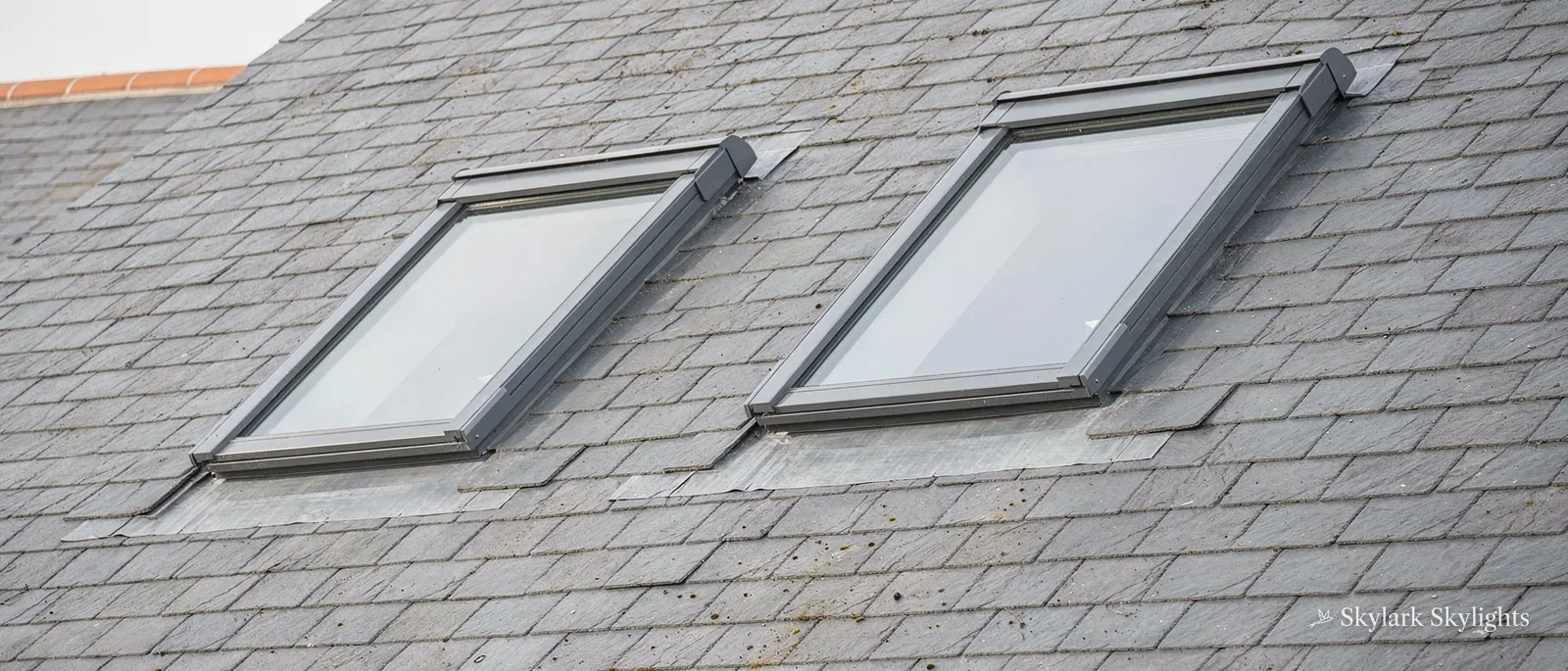
Every VELUX roof window carries a short code, something like MK04 or CK02, and it is the quickest way to describe the size of the window in your roof. The code is not a measurement. It is a label that stands for a width and a height from the maker's range. Once you can read it, a conversation about VELUX window sizes gets much simpler, whether you are planning a like-for-like swap, asking about a bigger opening or just trying to work out what is already above your bed. This guide takes the code apart, shows where to find it, explains what it can and cannot tell you, and sets out how a size is chosen from the spot in the room where you want the daylight to land. It is one branch of our VELUX roof window section.
Reading the code from left to right
A VELUX size code has two parts. The letters at the front give the width of the window. The digits that follow give the height. That is the whole rule, and it holds across the range, so a code with a different first letter is a different width and a code with different digits is a different height.
Take MK04 as the example. The M tells you the width, the K is part of the same width marking, and the 04 tells you the height. The pairing of letters matters, because the letters do not stand for a unit you could measure with a tape. They are an index into the maker's list. MK is one width. CK is a narrower one. UK is wider again. The same goes for the digits. A higher number does not mean a figure in centimetres or inches. It points to a height in the same list, and the heights climb as the numbers climb.
This is why guessing a size from a code is unreliable if you do not have the list in front of you. What you can rely on is the comparison. Two windows with the same letters are the same width. Two windows with the same digits are the same height. If both match, the sizes match. That is what makes the code so useful when a window is being replaced, because the like-for-like unit is simply the one with the same code.
Why the code is short
The code was never meant for homeowners. It is a catalogue reference so that a supplier, a roofer and a manufacturer can all point at the same window without arguing over millimetres. Treat it as a reference number that happens to describe a size.
Finding the code on the window you already have
The code is printed on a label on the window itself. On most roof windows the label sits on the edge of the opening sash, or on the frame where you can see it once the sash is swung open. If your window opens with a top-hung or centre-pivot action, open it and look around the inner edge of the frame, and also along the top edge of the sash. The label usually carries the code, a production date and a type reference, and it is the most reliable piece of information about the unit.
If the label has worn away, been painted over or been hidden by a blind casing, there are other places to look. An installation manual or invoice from the original fitting may name it. A photograph taken from inside, showing the whole window, can also help someone identify the model range, though the size still needs confirming.
When the label cannot be found
An old window may have lost its label altogether. In that case the size is measured, and the code is worked out from the measurement. This is routine at a free survey. We measure the visible glass, the frame and the opening in the roof, then match the result to a code. We also check the rafter spacing from the loft side, since the rafters decide how wide an opening can be without changing the roof structure.
What to note down before you call
- The code
- letters and digits from the label
- The room
- bedroom, bathroom, landing, loft room
- Opening style
- top-hung, centre-pivot or fixed
- Where it leaks or fogs
- which pane and which edge
- Photos
- outside, inside and the label
What the code tells you, and what it leaves out
The code tells you the size of the window. It does not tell you the whole story of the installation. Three things sit outside it and all of them matter if the window is being replaced.
The first is the flashing. Flashing means the metal pieces that seal a window into the tiles or slates, cut to suit one covering and one window width. A new window of the same code usually comes with a fresh flashing kit in the same size, matched to your tiles or slates. Old flashing has weathered along with the old frame, so it is part of what a replacement renews.
The second is the generation of the unit. The maker has changed the details of its windows over the decades. A window of the same code from a different era can differ in how it sits in the opening, how deep the frame is and how it connects to the sash. A modern unit of the same code will fit the same hole, but the details around the edge are not always identical, and an old opening sometimes needs small adjustments to take a new frame neatly.
The third is the glazing and its performance. Two windows with the same code can have very different glass. Older double glazed units lose efficiency as their seals age, while a current unit is made to meet the thermal limit that applies to roof windows. We come back to that in the chapter on regulations.
Reading a code against your roof
The code tells you what the window is. Your roof tells you what it can be. A narrow code can often fit between a pair of rafters without any structural change. A wider one may need a rafter trimmed, which turns a swap into building work. Knowing the difference before you choose a size is the real reason to understand the code.
Choosing a size from the spot you want lit
People talk about a room, yet they mean one place in it. The desk by the wall, the top stair, the basin where the mirror hangs, the side of the bed where you get dressed. That place decides the size. A roof window reaches the floor with a cone of daylight, and the cone moves as the sun moves, so the question is whether the window is large enough, and positioned high enough or low enough up the slope, to put the light where you stand.
A taller window in the same width puts more glass at the lower end of the slope, which lets in light at a lower angle and gives more outlook. A wider window spreads the light across more of the floor. A narrow window works well for a landing or a bathroom where you want a column of daylight over a single spot. For a loft room used as a bedroom or study, the height of the sill above the floor matters too, since you want to see out when seated.
Matching size to purpose
Several windows of a modest size can do more for a long loft room than one large one, because they spread the daylight along the room. A deep room with a single big window can end up bright at one end and dim at the other. We judge this in the room at the survey. The page on multiple roof windows goes into layouts.
Ventilation is part of the choice too. A roof window that opens lets warm air leave from high in the room, which helps a loft room in summer. A window that is too small to open comfortably will not do that job, so the opening style is worth settling alongside the size.
A like-for-like swap or a new opening
When someone asks us to replace a window, the first decision is whether the new unit is the same size as the old one. If it is, the existing opening is reused. The old window and flashing come out, the new frame goes in, the flashing is rebuilt around it and the inside lining is made good. This is the simplest kind of job and the one the size code supports best.
If the new window is a different size, the roof has to change. A smaller window means closing part of the opening and re-forming the roof around it. A larger one means cutting back the roof structure, fitting new trimmers between the rafters and often making good a bigger area of tiles or slates and plasterboard. That is a different job in scope and in regulation, so it is worth deciding early.
Same code or a different one
Same code
- Reuses the existing opening
- Little change to the rafters
- Quicker to plan and fit
- Needs matching new flashing
Different code
- Opening cut or reduced
- Trimmers may be needed
- More making good inside
- May involve Building Control
Regulations that follow the size
Size affects what the rules ask of the work. Replacing a roof window with one of the same size is a controlled fitting under Part L of the Building Regulations. Approved Document L treats a replacement roof window as a window. The heat-loss ceiling sits at 1.4 W/m²K, though band B on the energy rating also passes. Swaps of this sort can go through a competent person scheme.
A new opening is different. Cutting a fresh opening, or widening an old one, changes the roof structure. That is building work, so approval comes from the local authority or a registered building control approver. We carry out the notification wherever it is required, and fit to the regulations in force.
Escape and loft rooms
If the window serves a bedroom in the roof, size can matter for escape. Approved Document B limits roof windows as escape routes to storeys no more than 4.5 m up. The opening itself must be 0.33 m² clear, and no narrower than 450 mm either way. Over two storeys, a loft room needs a protected stair. A single-storey home with rooms in the roof is where a roof window can do the job. So the size code is only the start of the decision.
Planning
On a house, a rooflight normally falls within permitted development, subject to conditions that live in our planning guide. Flats, maisonettes, listed buildings and conservation areas follow different rules.
How we turn a code into a quote
You do not need to know the code to ask for a replacement. It helps, because it gives a starting point, but the real work happens at the survey. We visit, look at the window from outside and from the loft, read the label if it survives and measure the opening. We check the rafters, the roof covering and the finish around the window inside. Then we talk about the spot you want lit and whether the old size still suits it.
After the survey comes a written quote with a fixed figure, so nothing shifts on the day. A simple single window is a short job at roof level, a day or two. Our written guarantee on workmanship lasts 10 years.
Send the code if you have it, with a photo of the window from inside, using the survey form. WhatsApp on 07880 284133 works too. Still undecided about a swap? The walk-through in our replacement guide follows the job from first look to finished lining.
Size code queries, answered
Does the number in a VELUX code give the height in centimetres?
No. The digits are a height reference from the maker's range, not a measurement in centimetres or inches. A higher number means a taller window, but you need the maker's list, or a survey, to turn the code into a real dimension. Two windows with matching digits share the same height.
Can I fit a different size into the same hole?
Only a window with the same code is certain to suit the existing opening. A smaller window means closing part of the opening and re-forming the roof around it, and a larger one means altering the rafters. Either change is building work, so it is best discussed at a survey first.
What if the label on my window has gone?
The size can still be found by measuring the glass, the frame and the opening, then matching the result to a code. We do this during the free survey, and we also check the rafter spacing from the loft so you know how much room the roof allows.
Is an older window of the same code the same as a new one?
The size matches, but the details can differ. Frame depth, the way the sash connects and the flashing arrangement have changed over the years. A new unit of the same code fits the same opening, though the edges sometimes need small adjustments to sit neatly.
Do I need a new flashing kit when I swap a window?
Yes, a new flashing kit is normally part of a replacement. It is matched to your window width and to your tiles or slates, and it is what keeps the junction watertight. Reusing weathered flashing would undo much of the benefit of a new frame.
Book your free survey
Where do you want the light? Tell us in the form: the worktop, the stair, the desk.
No obligation. We survey before we price.
We cover Derby and 30 miles around.