Answer · Energy efficient rooflights
Do Skylights Lose a Lot of Heat?
The short answer
A skylight loses more heat than the same area of insulated roof, but a modern energy efficient unit loses far less than an old one. The loss is real, because glass is thinner than a roof build-up. It is also something you can control by choosing the right glazing, frame and fit, and a well installed rooflight is not a hole through which the heating escapes.
A fair answer about glass in the roof and the warmth below.
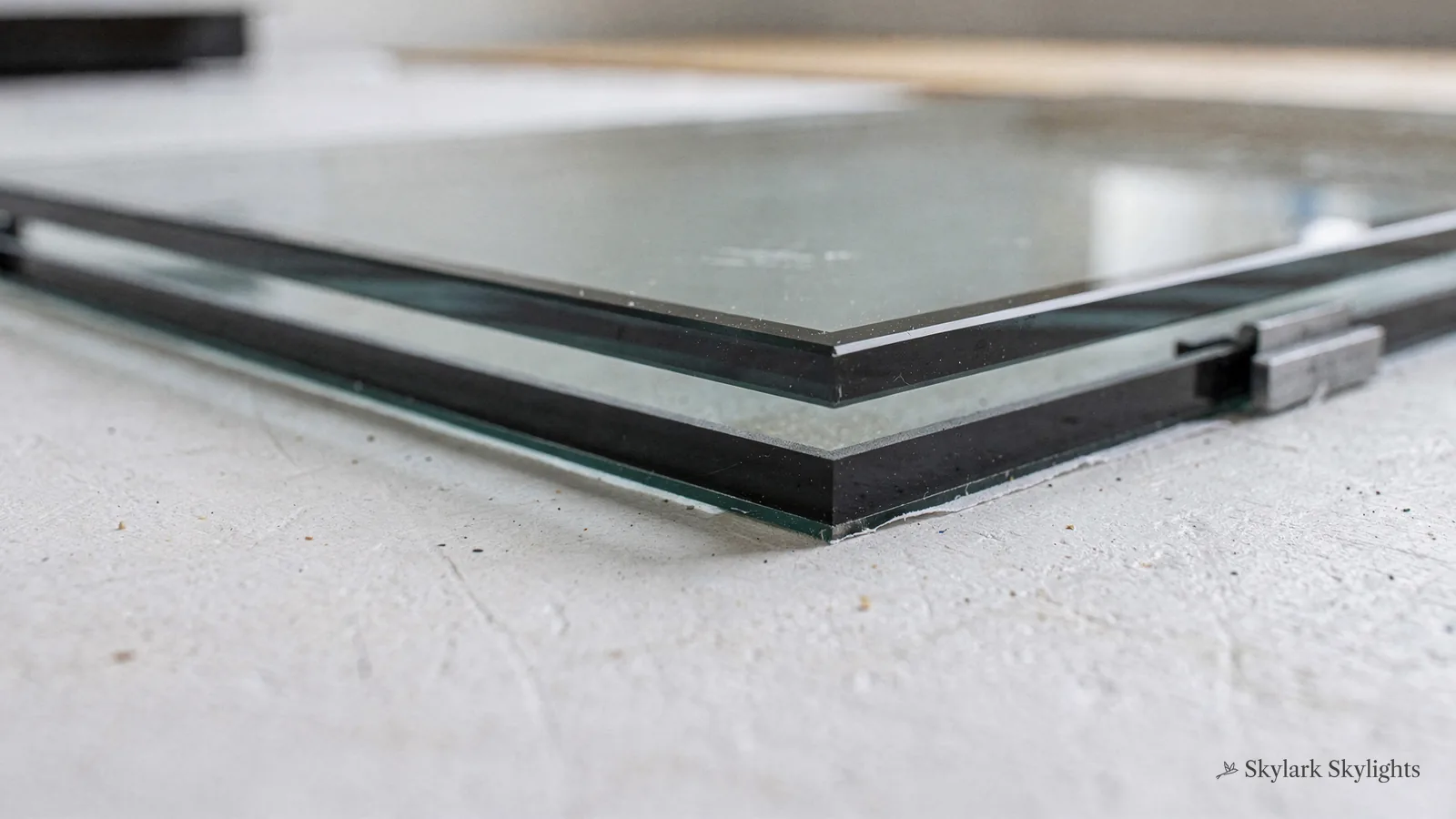
Where the heat actually goes
Heat leaves a room by three routes through a rooflight, and each one has its own cause.
- Through the glass itself, by conduction across the panes and the gaps between them.
- Through the frame and the edge of the sealed unit, which are less well insulated than the middle of the glass.
- Through gaps around the opening, where air leaks between the unit, the kerb and the roof.
The first two are measured by the U-value, the figure for heat loss per square metre. If that number is new to you, our guide to rooflight U-values explains it plainly. The third has nothing to do with the product and everything to do with how it is fitted. A good unit set badly leaks. A good unit set well does not.
Why old units lose so much
A rooflight that is single glazed, or an early double glazed unit with a metal spacer and no coating, loses heat quickly. The spacer carries cold across the edge, the air gap is plain air, and there is no coating to bounce heat back. Over the years the seal can also fail, letting moist air in and ruining the insulation of the gap. You can often see it as a misted pane. If that is what you have, the unit is past its best, and we cover that case under misted rooflight replacement.
Frames add to the problem. An old aluminium frame with no thermal break feels cold to the touch on a winter morning, and that cold is heat leaving the room.
What keeps the loss small now
A modern energy efficient rooflight is built to cut each of those routes.
- Low-emissivity coatings on the glass reflect heat back into the room.
- A gas fill, commonly argon, in the gap between the panes slows heat crossing it.
- A warm edge spacer stops the rim of the unit becoming a cold bridge.
- A thermal break in an aluminium frame separates the cold outside face from the warm inside face.
- Triple glazing adds a further pane and gap where the glass is large or the spot below is one you sit in. We set the choice out in double or triple glazed rooflights.
Under Part L, every new or replacement unit in an existing home must also stay under a heat loss ceiling. Roof windows face the window standard. Rooflights, lanterns included, are allowed up to 2.2 W/m²K. A lawfully fitted unit therefore cannot be a poor performer.
Size, position and what you will notice
Heat lost is the area of glass multiplied by its U-value and by how cold it is outside. So the size of the opening matters as much as the quality of the glass. A compact window above a landing adds very little to the heating bill. A wide lantern over an open kitchen adds more, and is where the best glass is worth the money.
You also feel the loss before you see it on a bill. If you sit at a desk or a worktop beneath a poor unit you notice cold air falling from the glass. A better inner face temperature fixes that, and the same warmth keeps condensation away. If damp rims are the worry, stopping condensation on a skylight explains the causes and cures.
One more point is worth making. Daylight can offset some electricity use in the day, since a bright room is less likely to need the lights on. It does not cancel the heat loss, but it is a real part of the balance. Position counts as well. A rooflight over a space that is heated all day, such as a living kitchen, is working harder than one over a spare landing, so the better glass belongs where the room is warmed most and lived in longest.
Getting it checked on your own roof
The truthful answer for your house depends on the existing unit, the size of the opening and the room below. Our free survey starts with the room and the place you want lit, and moves on to the roof. If the old rooflight is leaking heat, we explain why and what a replacement would change. The fixed written quote stays put, and a 10-year workmanship guarantee in writing covers the job.
Notifiable jobs get their Building Control notification from our side, and the install meets current Building Regulations. Book the survey on the form, or write to 07880 284133 on WhatsApp. Our overview of energy efficient rooflights sets out the range.
More on rooflight heat loss
Will a new rooflight make my room colder than a solid roof?
The glass will always lose more heat than the same area of insulated roof. But a modern unit is built to limit that, and the daylight it brings can cut how often the lights are needed. For a well chosen unit in the right place, the room stays comfortable.
How can I tell whether my skylight is losing too much heat?
Look for a cold inner pane, condensation around the rim, a misted gap between the panes, or a draught from the opening. Any of these points to an old unit or a poor fit. The survey will tell you which one you have.
Is a roof window better at holding heat than a flat rooflight?
Not as a rule. Part L classes them separately, with a higher ceiling for rooflights, but the quality of the glass, frame and fit decides the result. A well made flat rooflight can outperform a poor roof window.
Book your free survey
Where do you want the light? Tell us in the form: the worktop, the stair, the desk.
No obligation. We survey before we price.
We cover Derby and 30 miles around.