Guide · Energy efficient rooflights · 9 min read
Double or Triple Glazed Rooflights
Two panes or three, and what that changes in the room.
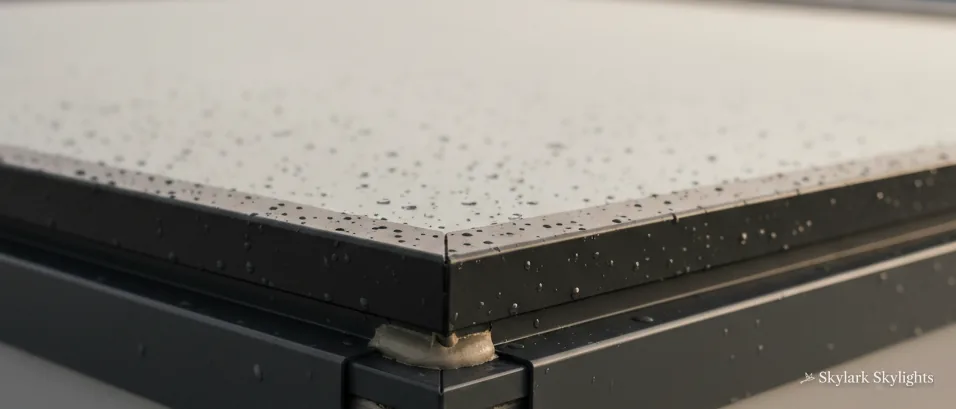
The choice between a double glazed skylight and a triple glazed rooflight comes up on almost every energy efficient quote. Three panes sounds better than two, and in one respect it is. But glass is not the only thing that decides how a rooflight behaves, and the third pane adds weight, thickness and a change in how the room feels in summer and winter. This guide sets the two side by side. It looks at heat loss, weight, the daylight that reaches the spot below, sun and overheating, noise, and the fit with the roof it sits in. By the end you should know which build suits your room, and what to ask so that the answer is based on your roof and not on a sales line.
What the extra pane really does
A double glazed unit has two panes with a sealed gap between them. A triple glazed unit has three panes and two gaps. Each gap is filled with a low-conductivity gas, commonly argon, and the glass faces carry low-emissivity coatings that reflect heat back into the room. More panes and more gaps mean more barriers between the warm inside and the cold outside, so the unit loses heat more slowly.
That is the whole benefit of the third pane, and it is a real one. A triple glazed rooflight can reach a lower U-value than a double glazed one of the same size. If you are not sure what that figure represents, read our plain guide to rooflight U-values first, since everything below leans on it.
What it does not do
It does not make a bad frame good. A rooflight loses heat through the frame and the edge as well as the glass, so a triple glazed unit in a poor frame, or one with a cold spacer, can disappoint. It also does not make the room warm on its own. The roof glass is one part of the house, and the walls, the loft and the heating all matter. What a third pane gives you is a warmer inner face on the glass and a lower loss per square metre, and that is worth having where the glass is large or the spot below is one you sit in for hours.
Weight, thickness and the roof beneath
Glass is heavy. A third pane adds roughly another layer of that weight, and the unit becomes thicker as well. On a small roof window this is a minor detail. On a large flat rooflight or a roof lantern it changes what the frame and the roof structure have to carry.
On a lantern or flat rooflight
A big triple glazed lantern needs a stronger frame and a kerb built to take the load, and the opening may need more support around it. The unit also takes more people to lift and set, and more care on the day. None of this rules triple glazing out. It means the survey has to measure the opening, look at the roof build-up and decide whether the structure is happy with the heavier unit before the quote is written.
On a pitched roof window
A roof window sits between the rafters, and its weight is carried by the frame and the timber around it. Heavier glass can mean a slightly stiffer sash to open and close. For a window you will reach for every day, over a bed or a top stair, it is worth asking how it handles in the hand.
Depth of the unit
The thicker unit also sits deeper in the opening. On a conservation rooflight or any roof where the profile matters, a deeper unit can change how the rooflight looks from the street. If the look from outside is a concern, tell us at the survey and we will show you the options.
Two builds, side by side
Double glazed
- Two panes, one sealed gap
- Lighter on frame and roof
- Slimmer unit, easier fit
- Suits a wide range of openings
Triple glazed
- Three panes, two sealed gaps
- Lower heat loss, warmer glass
- Heavier, needs a stronger frame
- Best where the glass is large
Daylight and sun at the spot
Every extra pane and coating absorbs and reflects a little of the light that passes through. A triple glazed unit therefore lets slightly less daylight through than a double glazed one of the same size. For a large lantern over an open kitchen the difference is small and the room still reads as bright. For a small roof window feeding a dim landing or a corridor, where every bit of light counts, it is worth weighing.
The coatings are not just there for winter. A solar control coating cuts the share of the sun's heat that gets through the glass, which helps in a south facing room that overheats in summer. A coating tuned for warmth does the opposite job. It lets the sun's heat in and keeps the room's own heat from leaving. The two are not the same glass, and picking the wrong one for the aspect of the roof is a common reason people dislike a rooflight they otherwise like.
Matching glass to the aspect
For a roof that faces south, the question is often how to stop the room getting too hot, so a solar control build-up earns its place. For a north facing slope, there is little sun to control, and the priority is keeping the warmth in and the light level up. A west facing roof takes the strong evening sun and may need a middle path. This is why we look at the roof direction at the survey, as well as at the spot in the room, before any glass is chosen.
Noise and the feel of the room
Rain on a rooflight can be loud, especially on a flat roof or a lantern over a quiet room. More panes add mass, and layered glass of different thicknesses breaks up the sound, so a triple glazed or laminated unit can soften the drumming. A double glazed unit with one pane laminated also does well here, and may be the more practical way to calm a bedroom or a study.
Laminated glass has a layer of clear plastic between two sheets. It holds together if it breaks, which is one reason it is chosen for a rooflight above where people walk or sit. If someone is going to be under the glass for long periods, such as at a desk or a bed, ask about it.
What the room feels like
The most noticeable difference is not noise but temperature close to the glass. The inner face of a triple glazed unit stays warmer in cold weather, so you do not feel the cold coming down on your head and shoulders when you sit beneath it. In the same way, the warmer inner pane resists misting. Both effects are strongest in the corners where the glass meets the frame. If you have had trouble with damp rims in the past, the page on stopping condensation on a skylight sorts the causes.
Which one suits which roof
There is no winner across the board. The right answer depends on the unit's size, the roof beneath it, the direction it faces and the room below. A few patterns help.
- A large lantern or flat rooflight over a lived-in kitchen extension is a good case for triple glazing, provided the frame and kerb are built for the weight.
- A modest window above a bathroom or hallway is often well served by a good double glazed unit, because the glass area is small and the gain from a third pane is modest.
- A rooflight over a bed or a desk, where you sit still for hours, benefits from the warmer inner face of the better glass.
- A south facing roof may need solar control more than it needs a third pane.
- A conservation or heritage roof may limit the depth of the unit, which narrows the choice.
Meeting the regulations either way
Either build can clear the Part L bar for an existing home. Roof windows are held to the window standard, and rooflights, lanterns among them, to an easier figure of 2.2 W/m²K. So the decision is not about getting through Building Control. It is about the comfort you want beyond the minimum. Our team files the Building Control notification when a job needs one, and the build meets current Building Regulations whichever glass you pick.
Choosing by the room and the roof
| Situation | Leans towards |
|---|---|
| Large lantern, kitchen | Triple glazed |
| Small roof window, landing | Double glazed |
| Above a desk or bed | Triple glazed |
| South facing, overheats | Solar control glass |
| Tight heritage profile | Slim double glazed |
Deciding, and what we do at the survey
The honest way to decide is to measure, not to guess. Our free survey begins in the room, at the place you want lit, and then goes up to inspect the roof above it. No price comes first. Along the way we note which way the roof faces, how large the opening needs to be, what the structure will carry and how the room is used.
From that we recommend a glazing build and tell you why. Sometimes it is triple glazing in a thermally broken frame. Sometimes a well made double glazed unit is the sensible answer and the money is better spent on getting the size and position right. A fixed written quote names the unit and stays as written, and a 10-year workmanship guarantee in writing goes with the job.
A short checklist before you decide
- What is the whole-unit U-value, at my size and angle?
- Which way does my roof face, and does the glass suit it?
- Will the frame and roof carry the weight?
- Do I sit under it for hours, or walk past it?
- Is the unit slim enough for the look from the street?
To have that done for your own roof, fill in the survey form, or use WhatsApp on 07880 284133. Our overview of energy efficient rooflights sets this choice in the wider picture.
Glazing choices, answered briefly
Is a triple glazed rooflight worth it for a small roof window?
Often a good double glazed unit is enough for a small opening, because the glass area is small and the extra gain from a third pane is modest. Where you sit beneath it for long periods, such as over a bed or a desk, the warmer inner face can still justify the upgrade. We weigh it for your room on the survey.
Does triple glazing make a rooflight darker?
Slightly. Each pane and coating absorbs a little light, so a triple glazed unit passes a touch less than a double glazed one of the same size. Over a large lantern the difference is hard to notice. Over a dim landing fed by a small window, it is worth considering before you choose.
Will a triple glazed rooflight stop my room overheating?
Not by itself. Overheating is mostly about how much of the sun's heat enters, which depends on the coating. A solar control coating helps a south facing roof, whether the unit is double or triple glazed. Ask for the glass to be matched to the direction your roof faces.
Can I put a heavier triple glazed unit in my existing opening?
Sometimes, but the frame, the kerb and the structure around the opening have to carry the extra weight. The check comes before any quote. If the opening needs strengthening, the work is written into the price from the start.
Do both glazing types meet Building Regulations?
Both can. Roof windows must reach the window standard, and rooflights need a U-value of 2.2 W/m²K at most. Notifiable work gets its Building Control notification from us. So the choice is about comfort beyond the limit, not about compliance.
Book your free survey
Where do you want the light? Tell us in the form: the worktop, the stair, the desk.
No obligation. We survey before we price.
We cover Derby and 30 miles around.